Insulation plays a major role in how comfortable and energy efficient an Australian home feels. With hot summers, cool winter nights, and big temperature swings in many regions, the right insulation choice can reduce energy bills and improve year-round comfort. One option that often comes up is air cell insulation. But is it actually worth it for Australian homes, or is it better suited to specific situations?
To answer that, it helps to look at how air cell insulation works, where it performs best, and how it compares to more traditional insulation types.
Air cell insulation is a reflective insulation product made from layers of foil and enclosed air pockets. The design combines reflective surfaces with trapped air cells to reduce heat transfer.
Unlike bulk insulation, which slows heat flow through material thickness, air cell insulation primarily reflects radiant heat. This makes it particularly effective in situations where radiant heat gain is the main issue, such as roofs exposed to strong sun.
Air cell insulation is commonly installed in roofs, walls, and sheds, often wrapped around framing or fixed beneath roofing materials.
Australian homes deal with intense solar radiation, especially in warmer climates. In places like Australia, heat entering through the roof is a major contributor to indoor temperature rise.
Air cell insulation reflects a large portion of radiant heat away from the building envelope before it enters living spaces. This can noticeably reduce heat load during summer, making homes more comfortable and reducing reliance on air conditioning.
It is also lightweight, moisture resistant, and does not sag over time, which appeals to builders and renovators looking for long-term performance with minimal maintenance.
In hot Australian conditions, air cell insulation performs best when installed correctly with an air gap next to the reflective surface. This air gap allows the foil to reflect radiant heat rather than absorb it.
When used under metal roofs or in wall systems exposed to direct sun, air cell insulation can significantly reduce heat transfer. Homes often feel cooler during the day, particularly in roof spaces and upper levels.
For sheds, garages, and extensions, air cell insulation is especially popular because it is easy to install and effective at controlling radiant heat.
Quality air cell insulation also offers some benefit in winter, but it works differently from bulk insulation. The trapped air pockets provide a degree of resistance to heat loss, though not as much as thick bulk insulation like batts.
In cooler climates or homes that experience cold nights, air cell insulation is often used alongside bulk insulation rather than on its own. This combined approach helps manage both radiant heat and conductive heat loss.
Used alone in colder regions, air cell insulation may not deliver the same level of winter warmth as higher R-value bulk products.
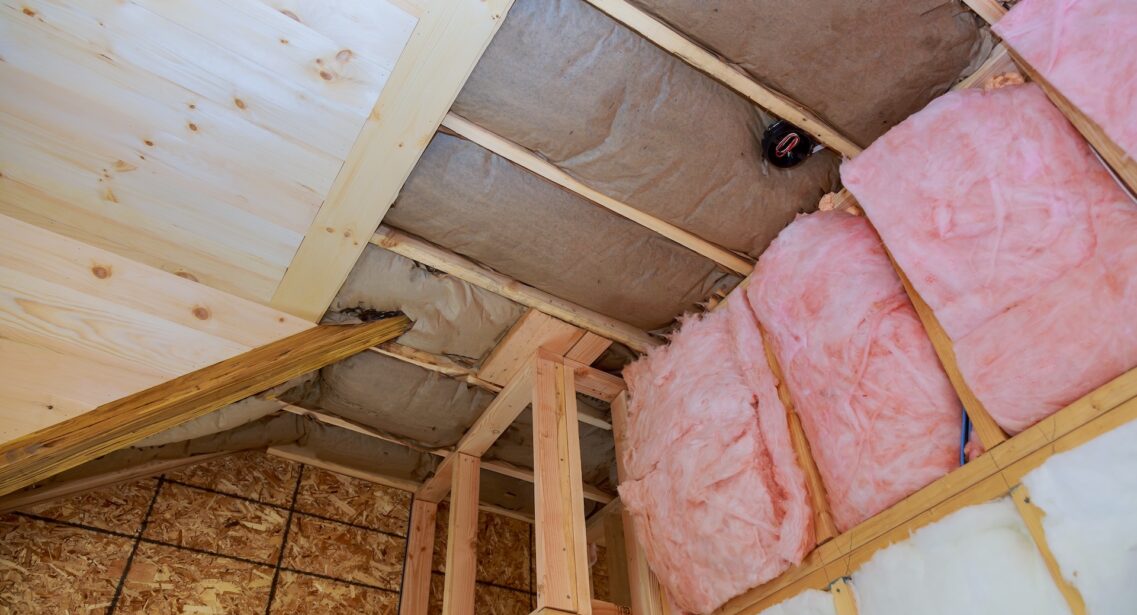
Bulk insulation, such as glasswool or polyester batts, slows heat flow through its thickness and is rated by R-value. It works well for both heat gain and heat loss when installed correctly.
Air cell insulation focuses on reflecting radiant heat and reducing heat transfer through enclosed air spaces. It does not rely solely on thickness to perform.
In many Australian homes, the most effective solution is a combination of both. Air cell insulation reflects radiant heat at the roof or wall surface, while bulk insulation inside the cavity manages overall thermal resistance.
One advantage of air cell insulation is its resistance to moisture. The foil layers act as a vapour barrier, helping reduce condensation when installed properly.
This can be beneficial in roof spaces where condensation may form due to temperature differences. However, incorrect installation can trap moisture if ventilation is not considered.
Professional installation and correct placement are important to avoid unintended moisture issues.
Air cell insulation is flexible, lightweight, and relatively easy to handle. It can be installed in tight spaces and around framing without cutting large volumes of material.
This makes it attractive for retrofits, sheds, garages, and extensions. It is also durable and does not settle or compress over time, which helps maintain consistent performance.
Because it is reflective rather than fibrous, it does not cause irritation during handling and does not degrade in the same way as some bulk products.
Whether air cell insulation is worth it depends on how and where it is used. In hot climates, roof spaces, metal buildings, and areas exposed to strong radiant heat, it can deliver real benefits.
For whole-of-home insulation, it is often most effective as part of a layered system rather than a standalone solution. Homes in mixed or cooler climates usually benefit from pairing air cell insulation with bulk insulation to cover all forms of heat transfer.
Used in the right context, air cell insulation can improve comfort, reduce energy use, and contribute to a more stable indoor environment.
Air cell insulation is generally priced competitively, particularly when factoring in durability and ease of installation. While it may not replace bulk insulation in all situations, its ability to reflect radiant heat can reduce cooling loads and running costs over time.
For homeowners upgrading insulation or building new, considering air cell insulation as part of a broader insulation strategy often delivers the best results.
Air cell insulation can be a worthwhile investment for Australian homes when used appropriately. Its strength lies in managing radiant heat, which is a major factor in local conditions.
While it may not suit every situation on its own, combining air cell insulation with bulk insulation offers a balanced approach to year-round comfort. With correct design and installation, it can play a valuable role in improving energy efficiency and liveability across many Australian homes.
The Home Protection Upgrade That Pays for Itself: Roller Shutters for Windows
February 7, 2026Is Air Cell Insulation Worth It for Australian Homes?
February 7, 2026Same-Day Garage Door Repairs: Is It Worth the Call-Out?
February 7, 2026Same-Day Garage Door Repairs: Is It Worth the Call-Out?
February 7, 2026Green Waste Skip Bin vs General Waste Bin: What’s the Difference?
February 7, 2026

